
How a City Heights Native Is Blending Somali Culture and Matcha in San Diego
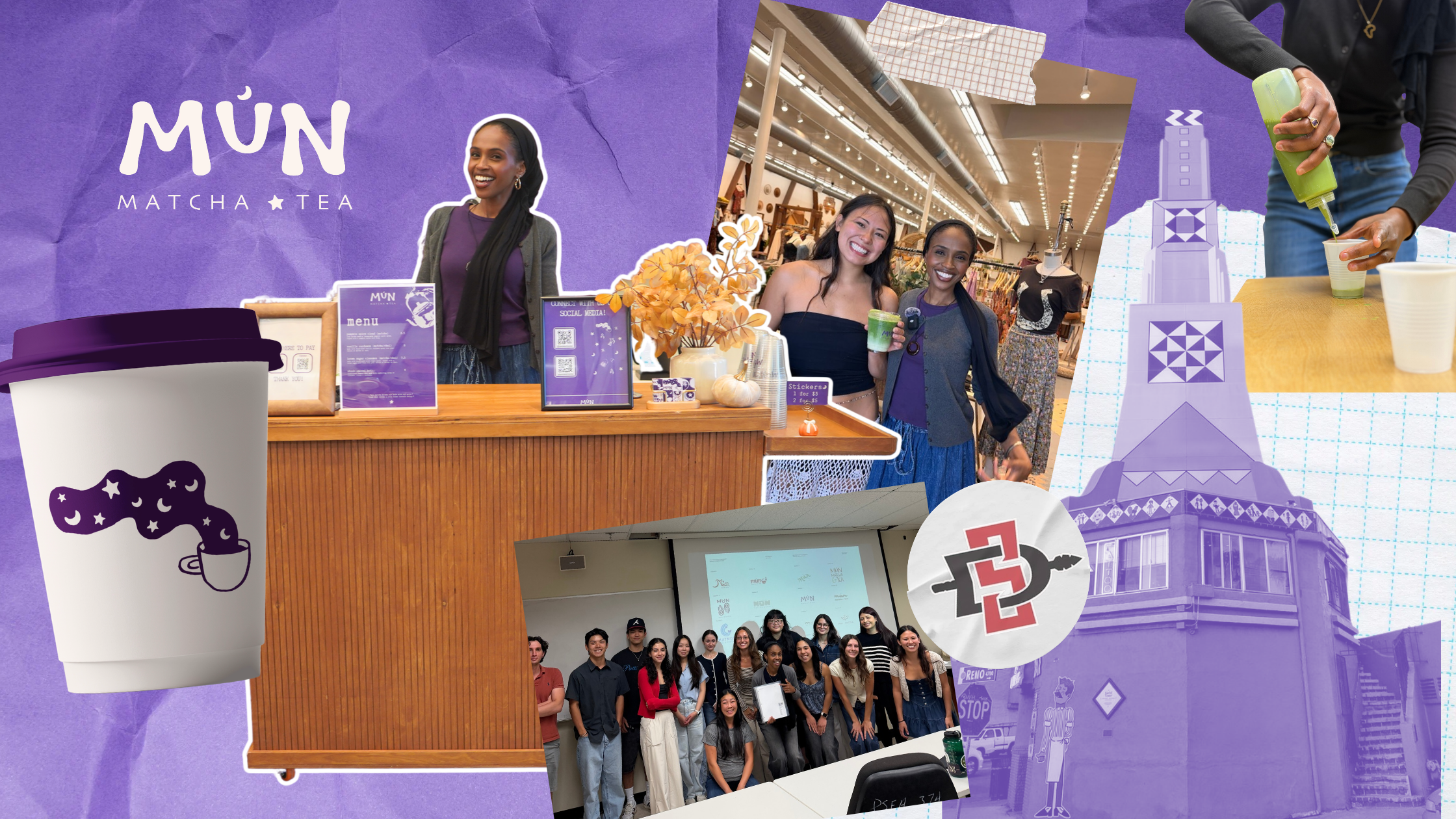
Akitso had the pleasure of sitting down with Maymun to learn more about the story behind Mún Matcha & Tea, what inspired her to start her business, and how she hopes to bring people together through matcha, Somali chai, and community.
You were born and raised in City Heights, a neighborhood shaped by generations of immigrant and refugee communities. Can you tell us a little about your upbringing and how your experiences growing up in San Diego shaped the person you are today?
I was born in City Heights, San Diego, CA, a neighborhood known for its vibrance and resilience, shaped by generations of immigrants and refugees who have built the foundation for a culturally rich community. Of course, San Diego is a huge part of my core identity, but for the first two decades of my life, it was all I knew. Since my family and I didn’t travel much growing up, I knew that going to college outside of San Diego would allow me to begin a journey of self-discovery that staying in my hometown wouldn’t. Leaving San Diego made me realize I wanted to chase my own career aspirations instead of my parents. Funny enough, although medicine was not ultimately the path for me, foreign policy gave me a new way to connect with my parents and their culture.
What brought your family to lay new roots in San Diego? What was the beginning of that like?
My parents were among many individuals and families who fled Somalia's civil war that began in 1991. Following the country’s collapse, they lived in refugee camps in Kenya for years before meeting each other and getting married. Fortunately, my father was sponsored by a family member who lived in the same apartment complex I grew up in and was able to help my parents leave their war-torn environment. Luckily, this apartment complex was home to families who, like my parents, were working to build a life for themselves in a new country. Our tiny complex truly felt like home.
What’s been your experience of being born/raised in San Diego…and if it feels relevant, in a Somali family/the Somali community in SD.
Growing up in San Diego has always felt like being part of a place where different cultures, backgrounds, and communities come together. There’s something about San Diego that has always felt special to me. The city has always felt like home to me, even when I was away. After spending seven years outside of the city, coming back made me realize just how much of myself is rooted here. It’s the people, the community, and the memories I grew up with that make San Diego feel so familiar and grounding. No matter how much time passed or how far I went, there was always a part of me that felt connected to this place. I think that’s what makes San Diego so special. It has a way of bringing people from all different walks of life together, and for me, it ultimately brought me back to where I started.
Being raised in a Somali family and being part of the Somali community here gave me a strong sense of culture, family, and belonging, while also allowing me to grow up surrounded by so many different communities and perspectives. As San Diego continues to grow and welcome new people, I want to share a part of what makes this city feel like home to me, which is my culture. It’s the same culture that shaped me, my family, and the community I grew up in, and I’m proud to share it with others who are now becoming part of San Diego.
How did you get into matcha?
Long story short: matcha came into my life after I had to give up coffee due to health reasons. Similar to many people’s experience, it was a rough transition at first. I couldn’t get over the grassy taste and I was just a girl wanting to spend all my money on silly drinks, so making it at home wasn’t even a thought! However, when I finally came to my senses and decided that spending $8 per drink (sometimes up to twice a day) was not sustainable, I began researching matcha brands that were known to be good quality and decided to start my days with homemade drinks. I quickly realized that matcha made me feel calmer and more relaxed, allowing me to have it more than once a day. Once I mastered the perfect at-home ratios, I began making my own syrups and cold foams, especially during the fall season, when warm spiced drinks were in.
What’s led you to starting your own business?
Truthfully, I never imagined I’d be a business owner. I always envisioned a 9-5 life for myself like most people. However, as I get older, I’m learning that there is no timeline for the things I want to do. I should give myself permission to experience or pursue whatever feels right for me. And right now, sharing my drinks with the world feels right.
What has the journey from imagining your matcha cart to bringing it to life looked like? What challenges or milestones have stood out most, and who or what has kept you going?
The simplest way for me to describe this experience is that it’s been a rollercoaster! The adrenaline is always rushing, and there’s this constant feeling of excitement, uncertainty, and anticipation that keeps me on my toes. Once I decided this project was something I was sure I wanted to execute, I immediately started doing research on what it would actually take financially, logistically, mentally, physically, etc. I spoke to many different people, including a few who warned me that it was a high-risk career with very little reward, which definitely made me question whether I was making the right decision. But I reminded myself that this logic applies to everything in my life, so I went for it. One of the most rewarding parts of this journey has been connecting with local business owners who have been incredibly supportive and encouraging. There are so many people in my community who are rooting for me and that is what keeps me going. One of the biggest challenges for me has been letting go of the pressure to make everything perfect. I’m learning to trust myself and allow myself to learn and grow along the way. Now that I officially have my matcha cart, I’ve been reflecting on how far this idea has come. What started as a very small idea has become something I can share with people. It’s made me appreciate the entire process, especially the mistakes, because I’ve learned so much about myself.
With so many matcha and chai drinks available today, what do you think distinguishes a truly great drink? How do you approach preparing your matcha and Somali chai, and what do you hope customers experience when they try your drinks?
I think good drinks are subjective, but a good quality drink reflects the intention behind it. When making matcha and chai, I want to honor their traditions by being thoughtful about how I prepare them. This means using the right ingredients, the proper tools, and taking the time to prepare each drink. At the end of the day, I want to serve something that I would be excited to order myself. What makes my business different is that we’re not just serving drinks. We’re inviting customers to connect in the same way the cultures behind our drinks have always encouraged connection. The drinks are a bridge between cultures, but more importantly, they create an opportunity for people to come together, share an experience, and connect with one another.
What excites you most about the popup model of doing business?
I love the entire concept behind it. There’s something really special about being able to pop up in different places and constantly move around the city. It allows you to build real relationships with different communities, discover new spaces, and connect with local businesses. I enjoy reaching out to people to introduce my business concept, learn more about what they’re doing, and explore whether there may be an opportunity for collaboration.
What does community mean to you?
I believe community is a feeling. It’s something you feel in the way people show up for one another and make you feel safe and welcomed. It was something I saw modeled in my family and culture from a young age. That sense of connection that has always been at the heart of Somali culture is what I want to share with others.
What role does branding play in your business? What hopes and dreams are you placing in your brand?
I knew that when I started this business journey, I wanted to create a brand identity that felt personal to me. I wanted something that reflects my story and passion, and speaks to the customers I hope to reach. The coffee/matcha/tea industry is expanding fast and there are so many options for people to choose from, so I knew I had to have a clear vision from the jump. Before people even get the chance to try my drinks, they’ll see my brand first, and that first impression can determine whether they want to give it a try.
I hope my brand eventually grows into something people trust and recognize, especially in San Diego. I hope to be known by my community as someone who creates products that they love and come back to.
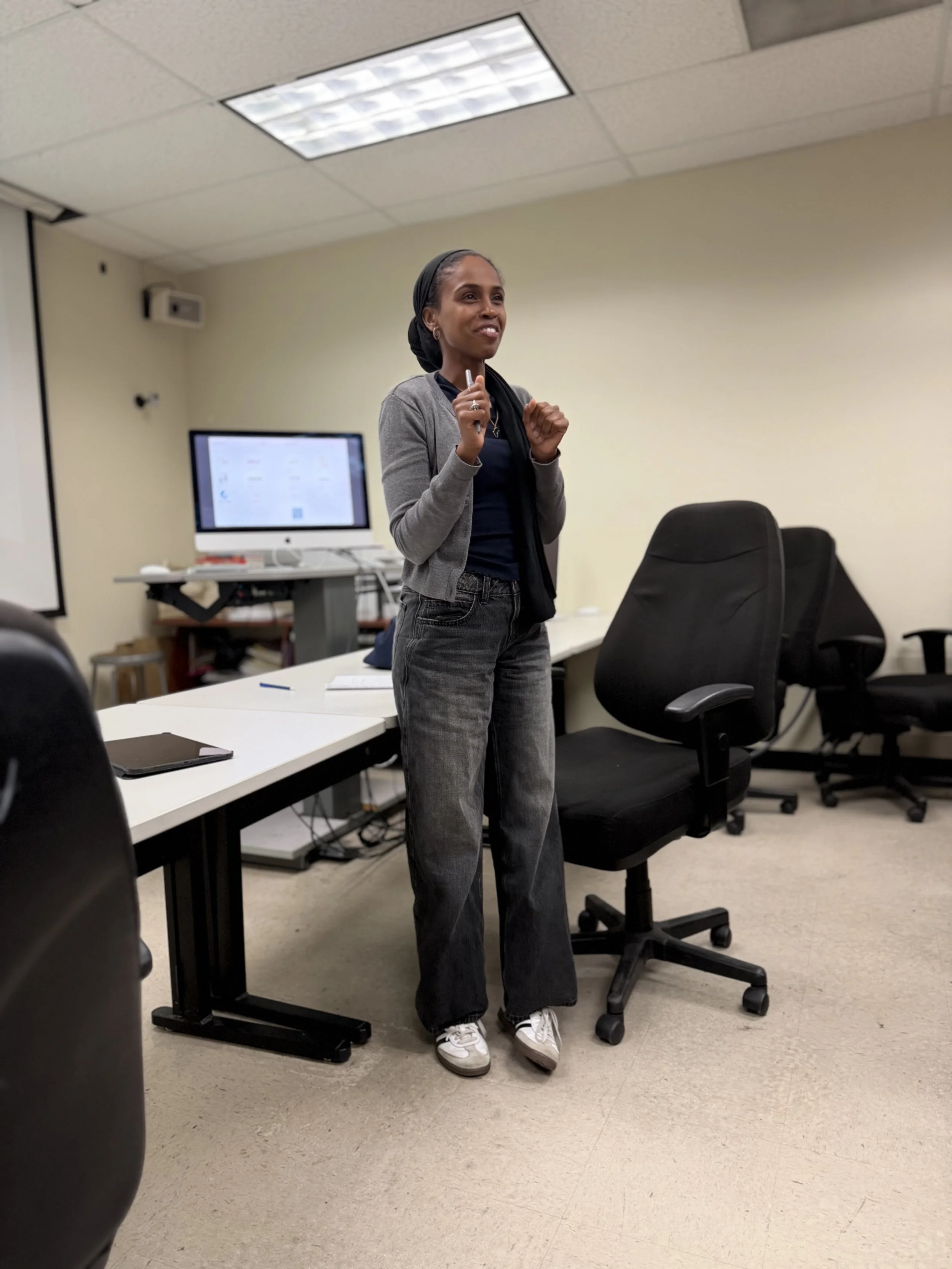
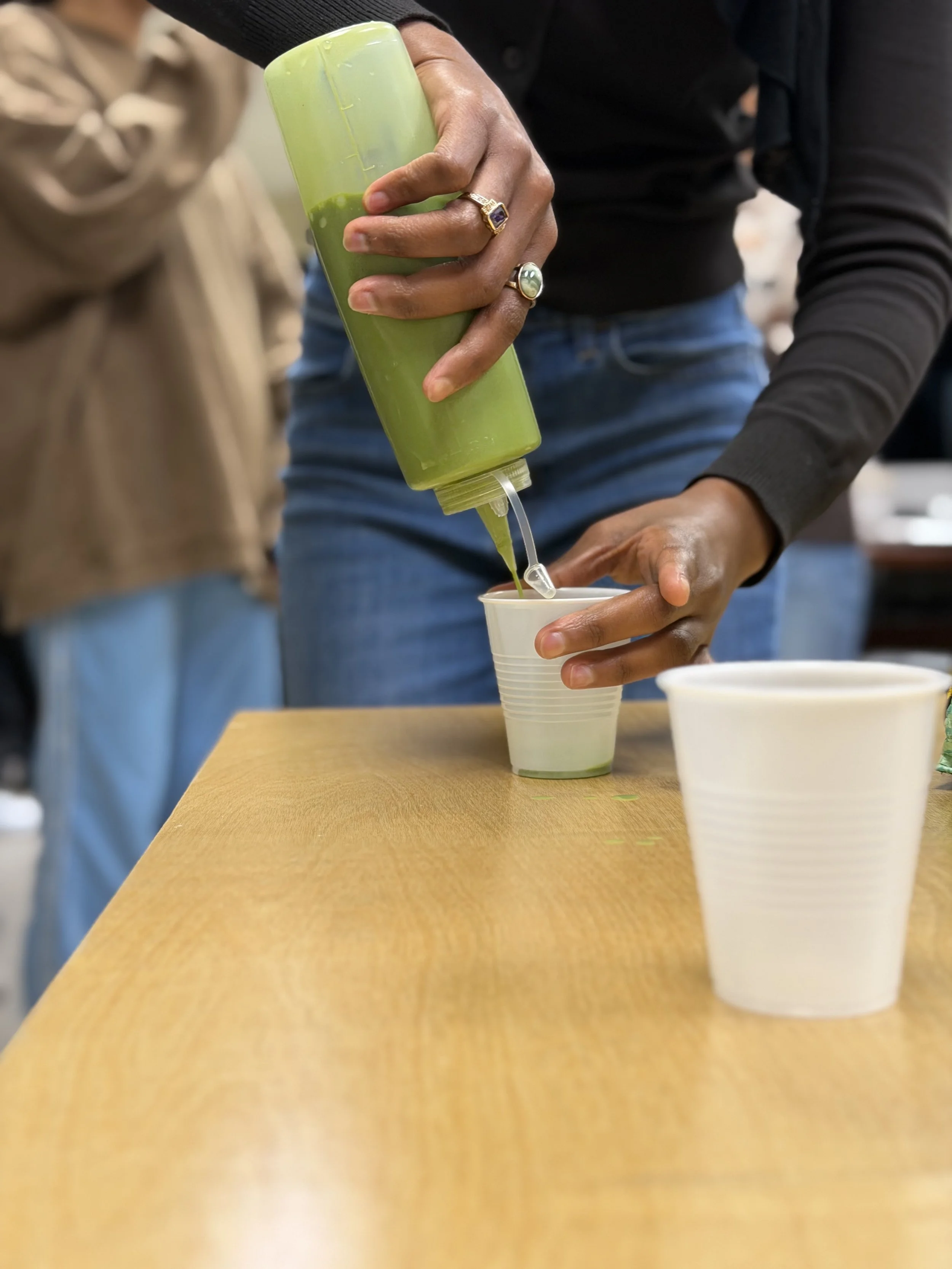
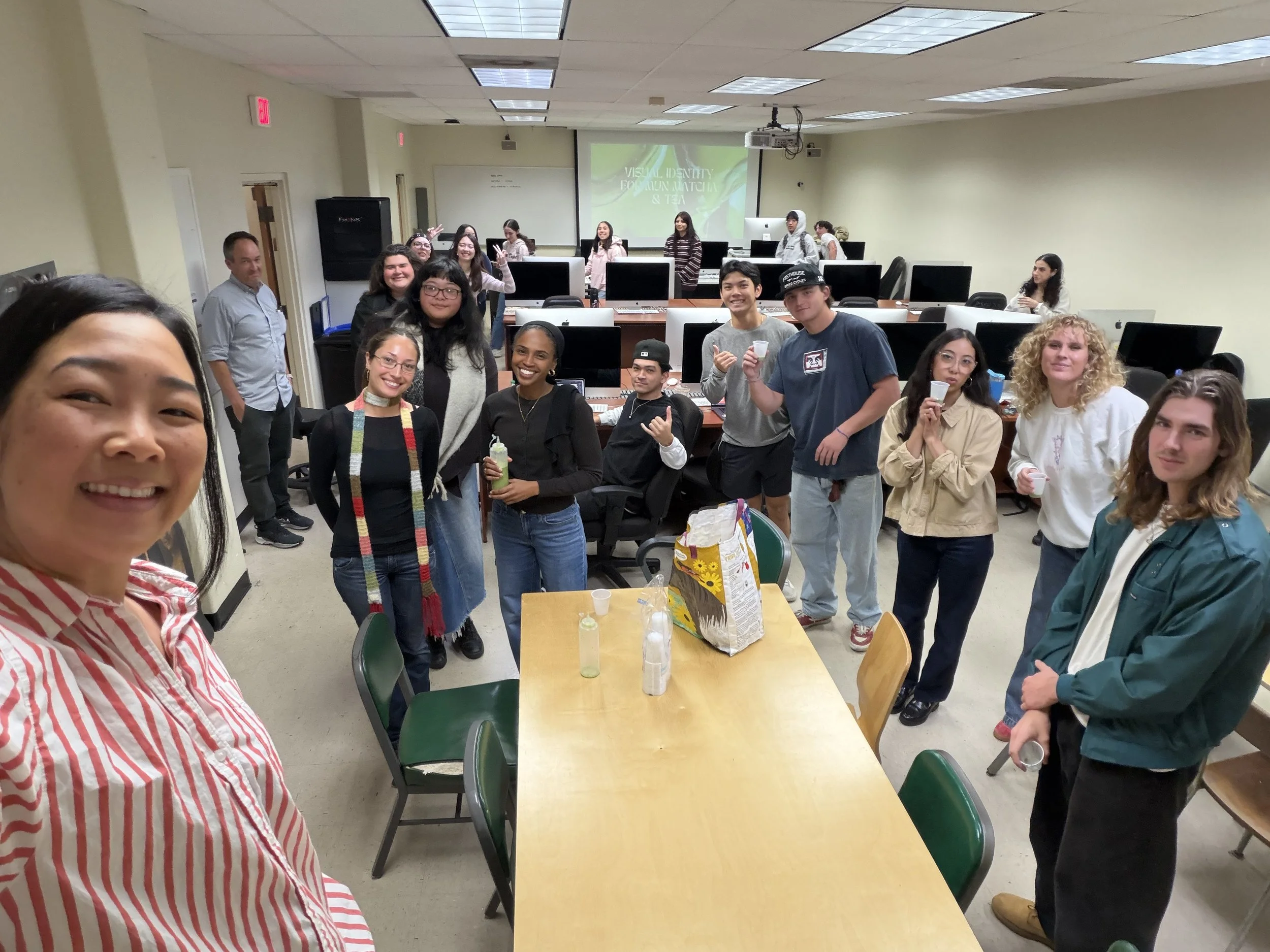
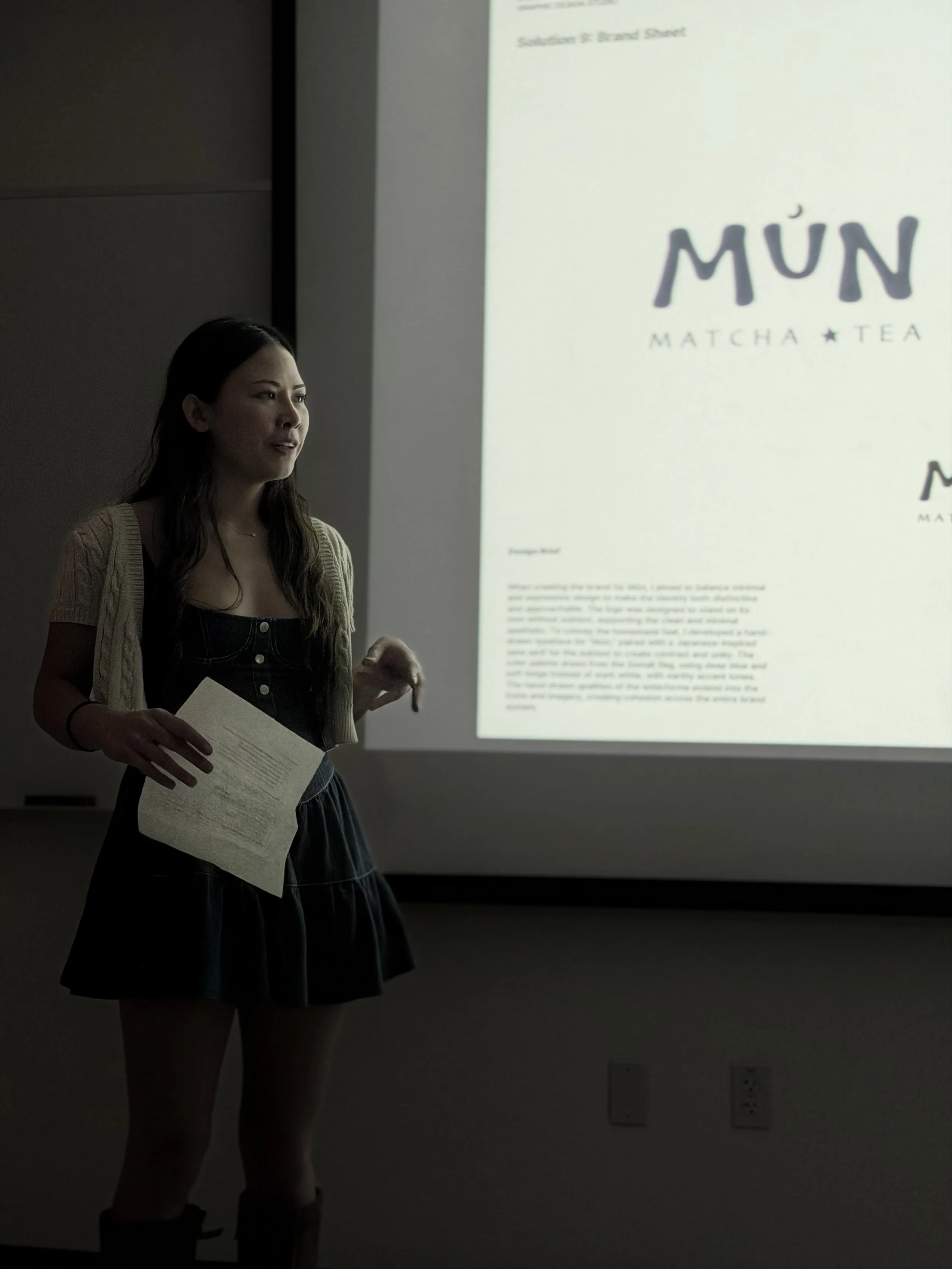
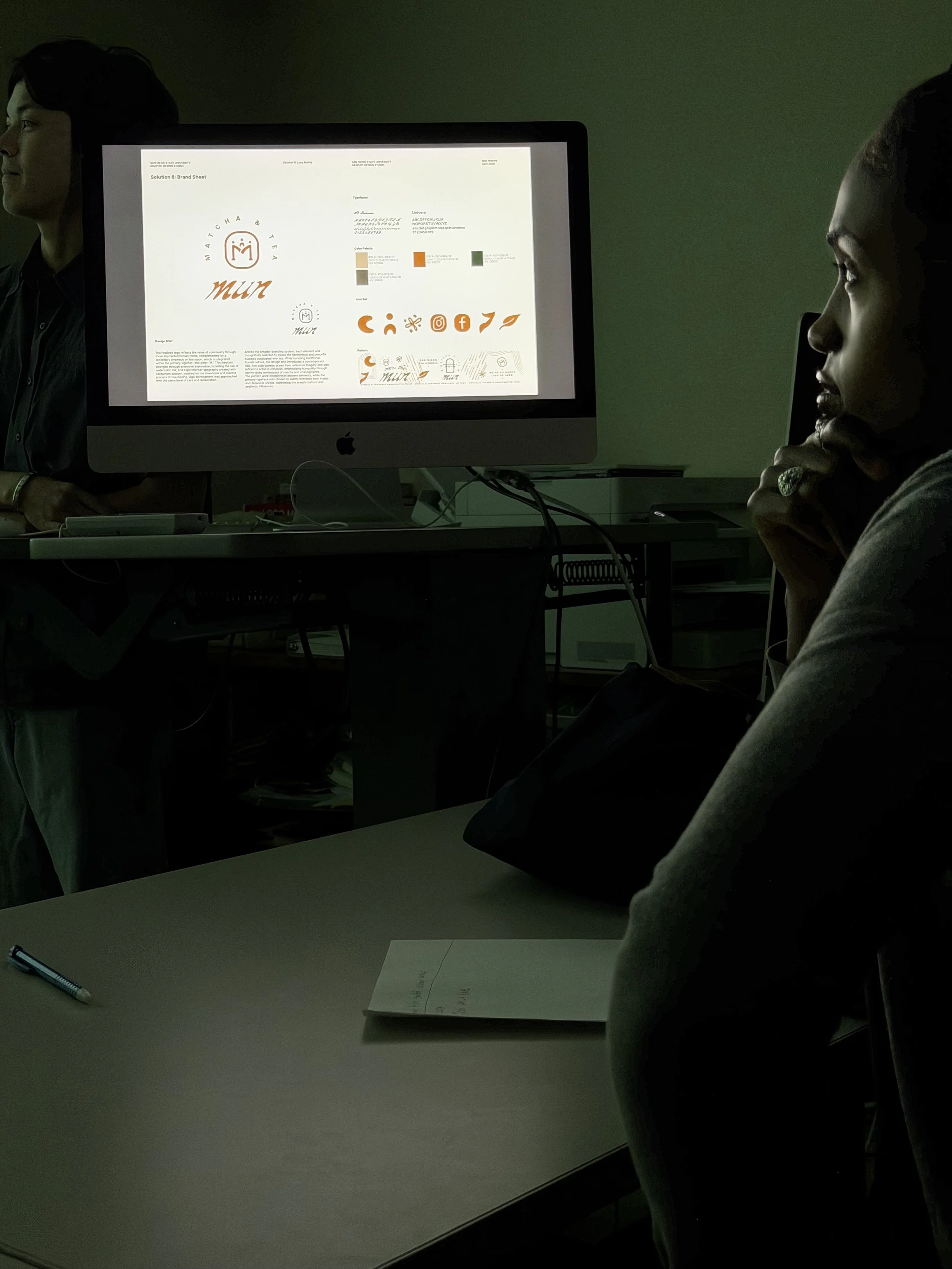
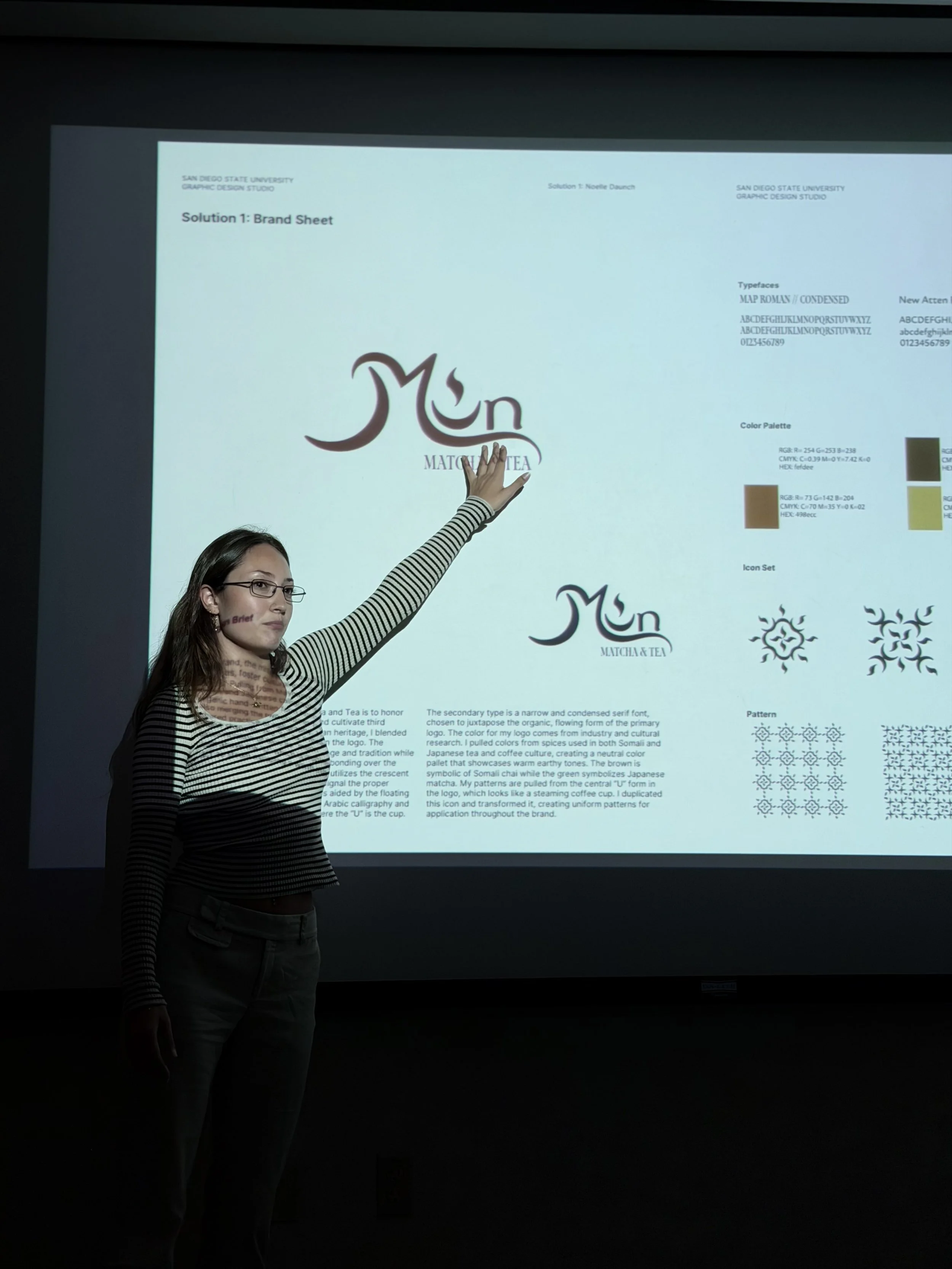
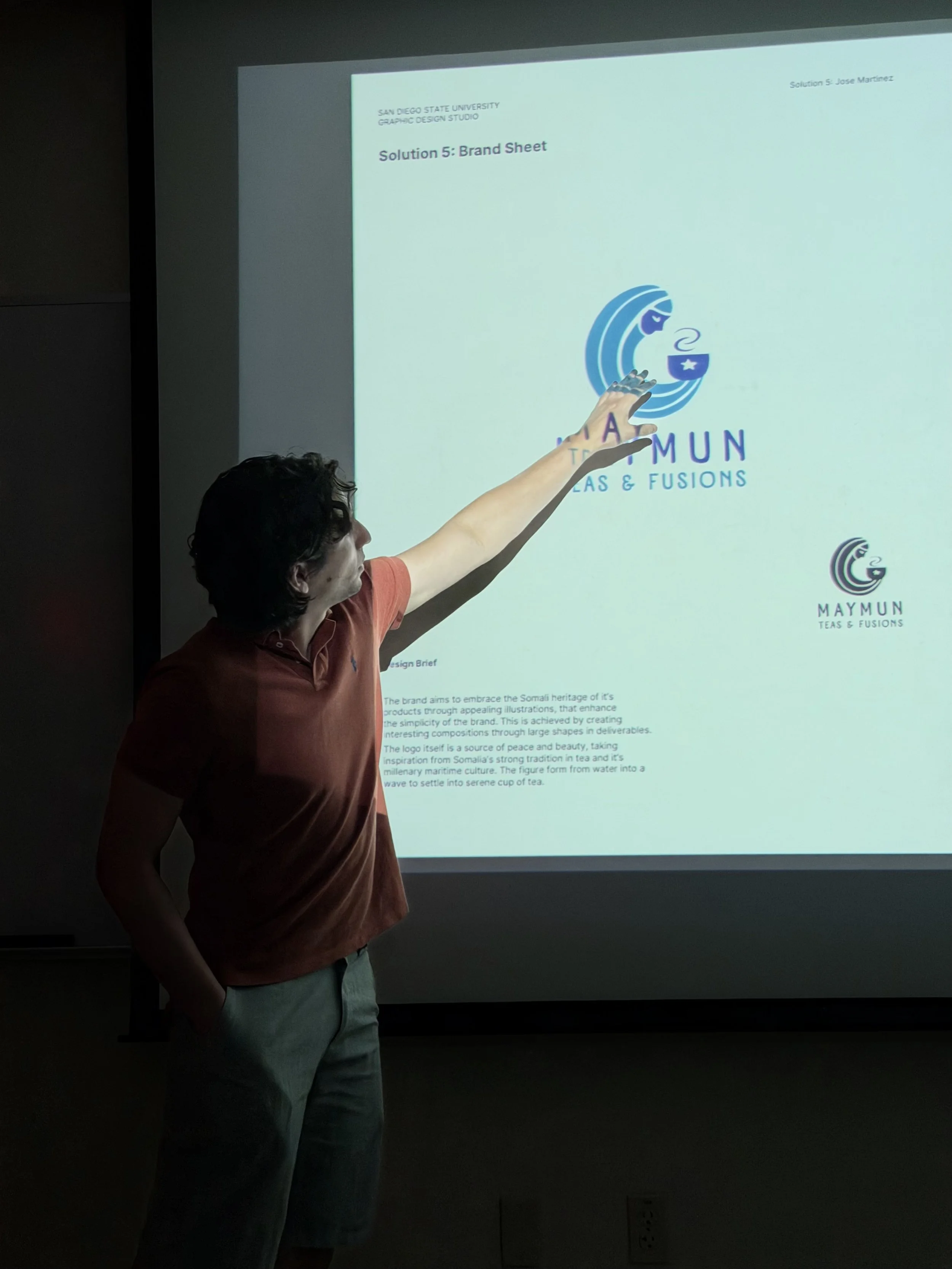
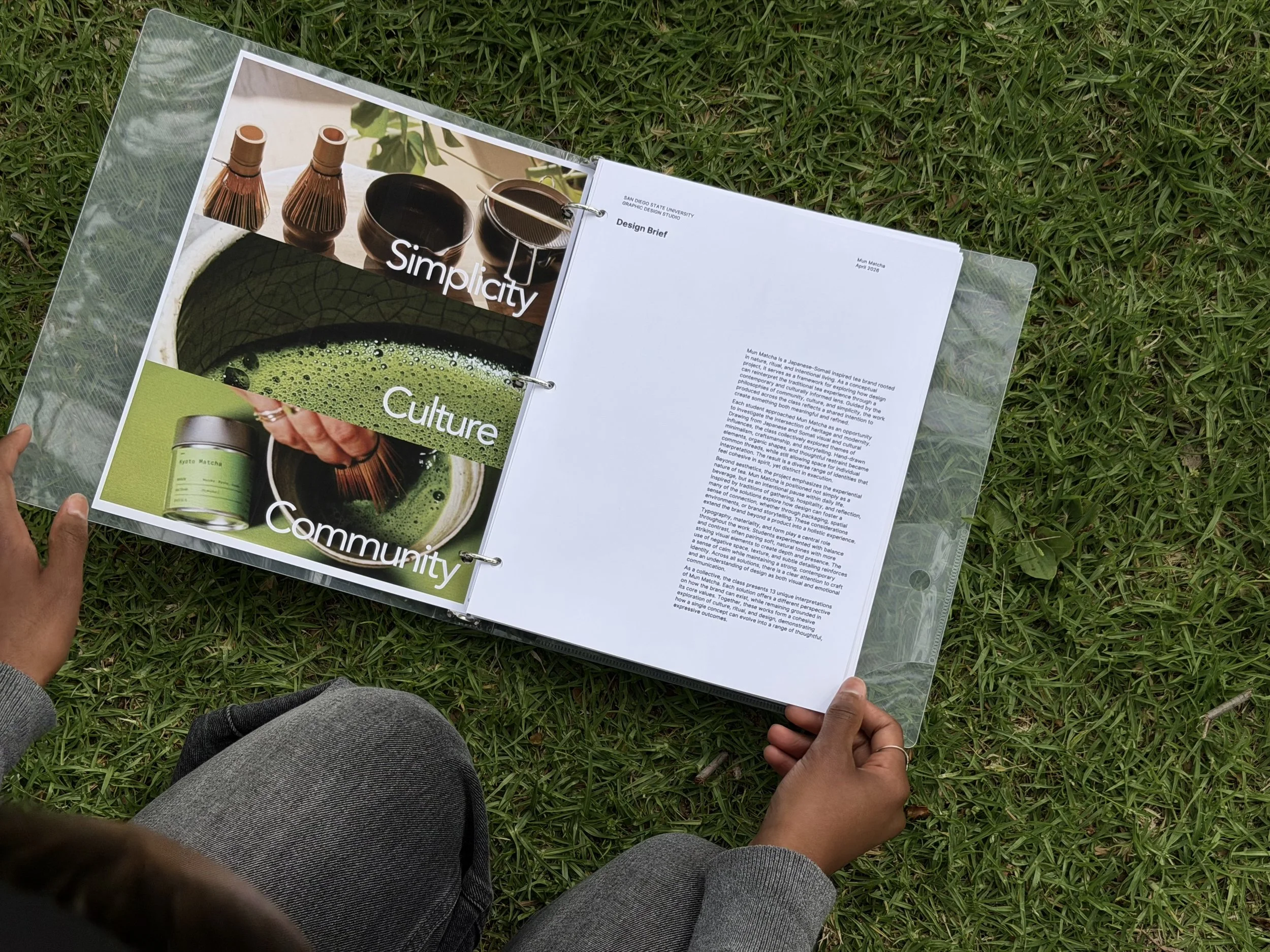
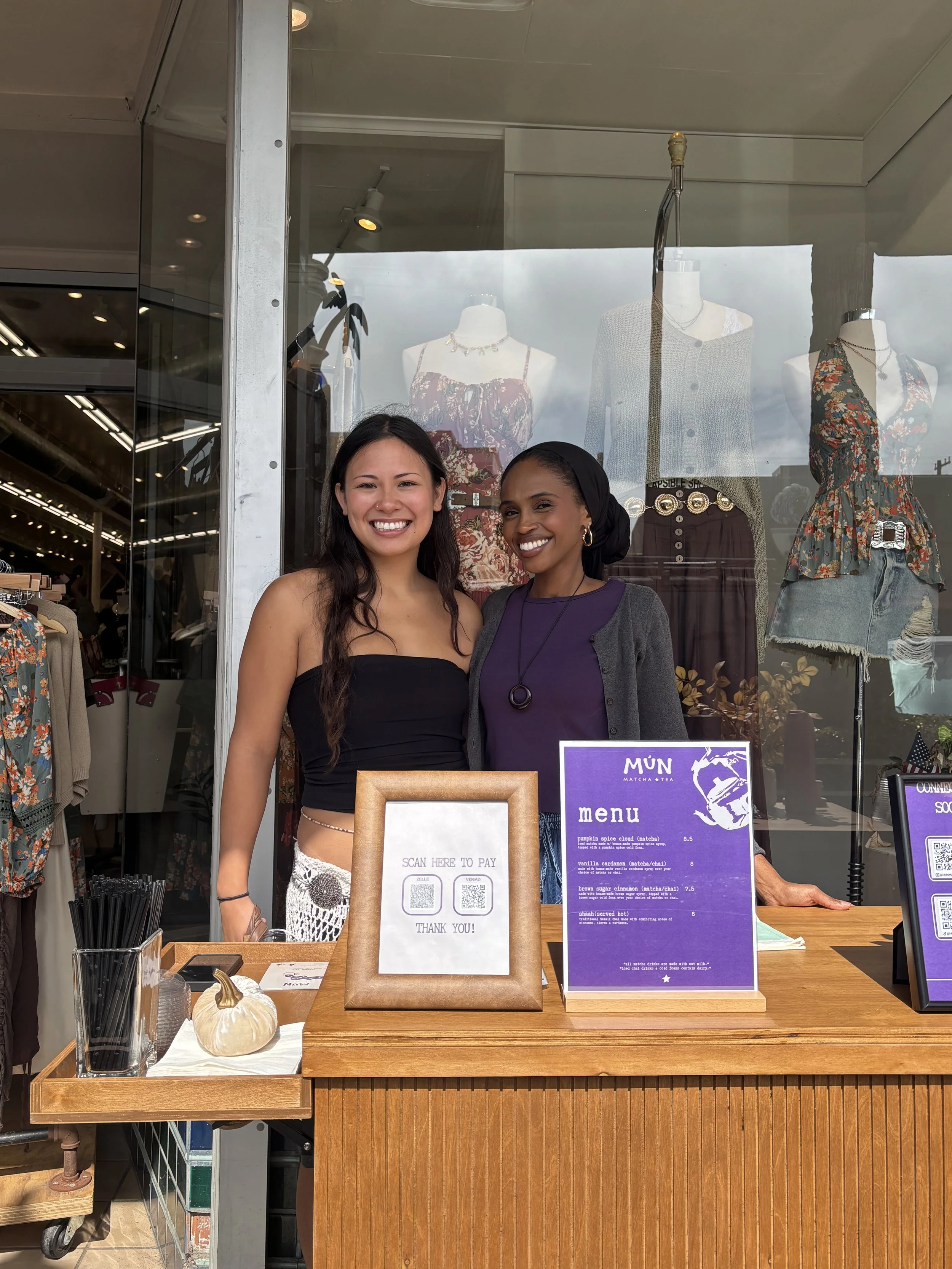
Working with Akitso and SDSU graphic design students helped transform your initial concept into a tangible brand identity. What was that collaboration like, and how did working with Anna and the design students help bring your vision to life?
Akitso has been a significant part of my business journey. After my first conversation with Anna, I immediately knew I wanted to work with her to bring my vision to life. We were aligned in so many ways when it came to our values, especially our shared focus on connecting with the local community. Through Akitso’s collaboration with SDSU’s Graphic Design department, I had the opportunity to serve as a real-world client for a small group of design students and it has been so exciting to watch my project evolve from an idea into a tangible product, and none of it would have been possible without Akitso’s guidance.
When you think about the future of your business, beyond the drinks themselves, what do you hope people come to know you for? What kind of impact do you want to make on the communities you serve?
I just want to bring people together in a way that feels natural. I grew up knowing how meaningful it can be to have a community that makes you feel welcomed and connected. I want to create that same feeling through my business, where a drink can be more than just a drink, and instead be a small reason for people to come together and share a moment.
